
Flexible Customized Reporting
Customizable financial reporting software allows accountants to build tailored dashboards, KPIs, and financial statements using flexible layouts, formulas, and live data connections. Reach Reporting provides a spreadsheet-style environment where firms can design client-specific reports without rebuilding them each month.
no credit card required
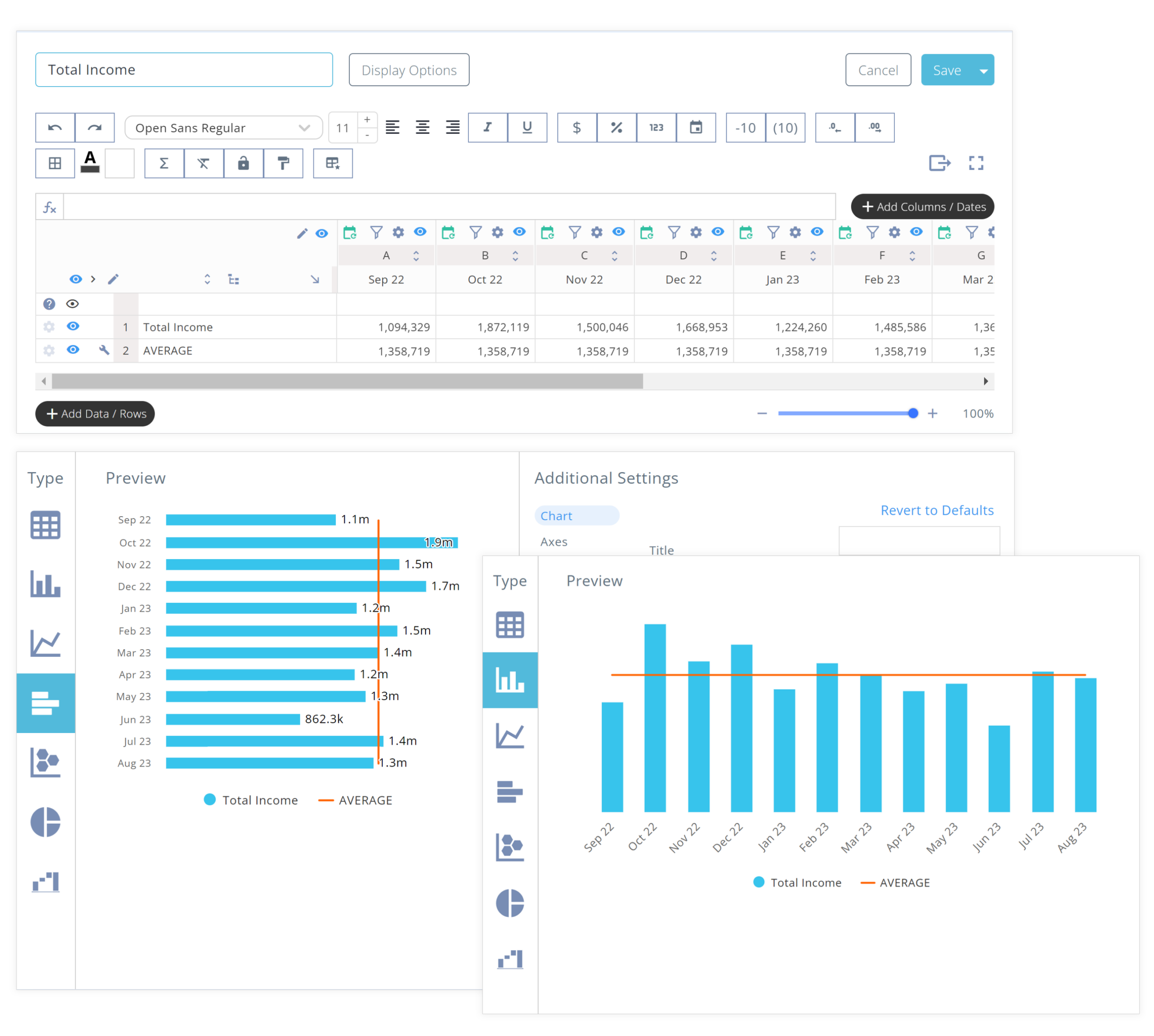
Familiar Spreadsheet Environment
Built for accounting firms managing multi-entity, multi-client reporting environments.
Simplify your work and feel at home with Reach Reporting’s spreadsheet environment. Our integrated spreadsheet automatically pulls in your financial and operational data, allowing you to work efficiently with familiar layouts while building customizable financial reports without manual data updates.
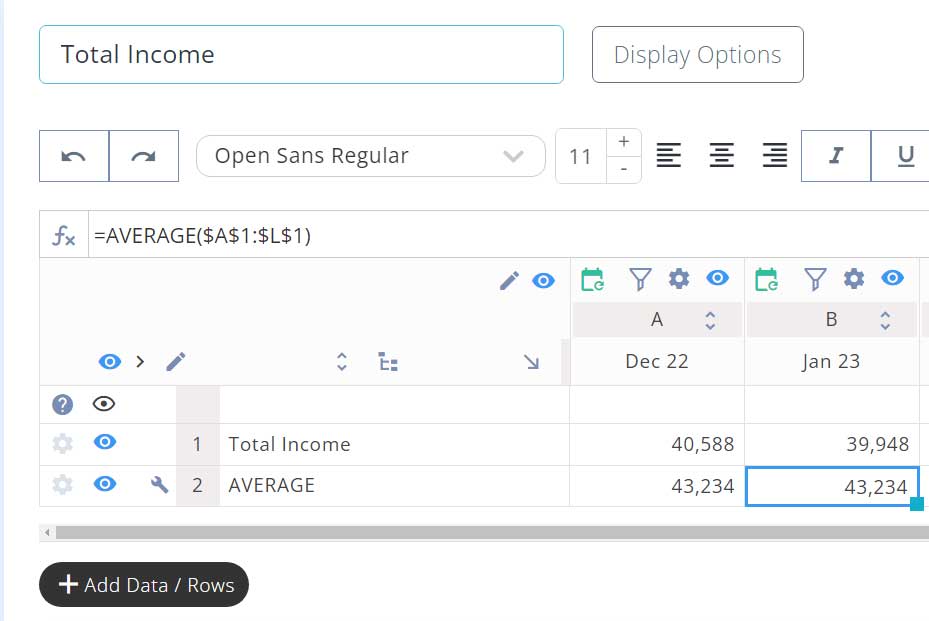
Excel-Like Formulas for Metrics
Effortlessly build any metric imaginable by using familiar Excel-like formulas for speed and efficiency. Save custom metrics to your personal library so they can be reused across reports, eliminating time-consuming rebuilding and supporting consistent financial analysis.
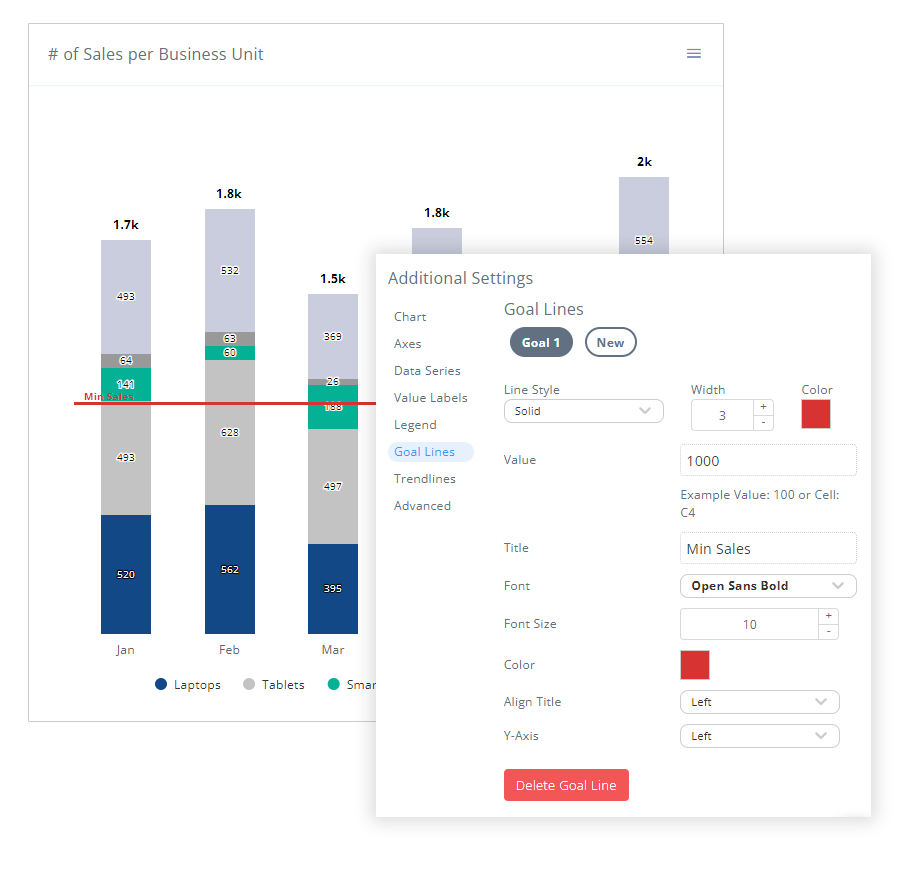
Set Goals and Targets for Clearer Insight
Incorporate goal lines and targets directly into your financial metrics to visually track progress over time. By comparing actuals against defined goals, accountants gain clearer insight and stronger alignment through visual financial dashboards.
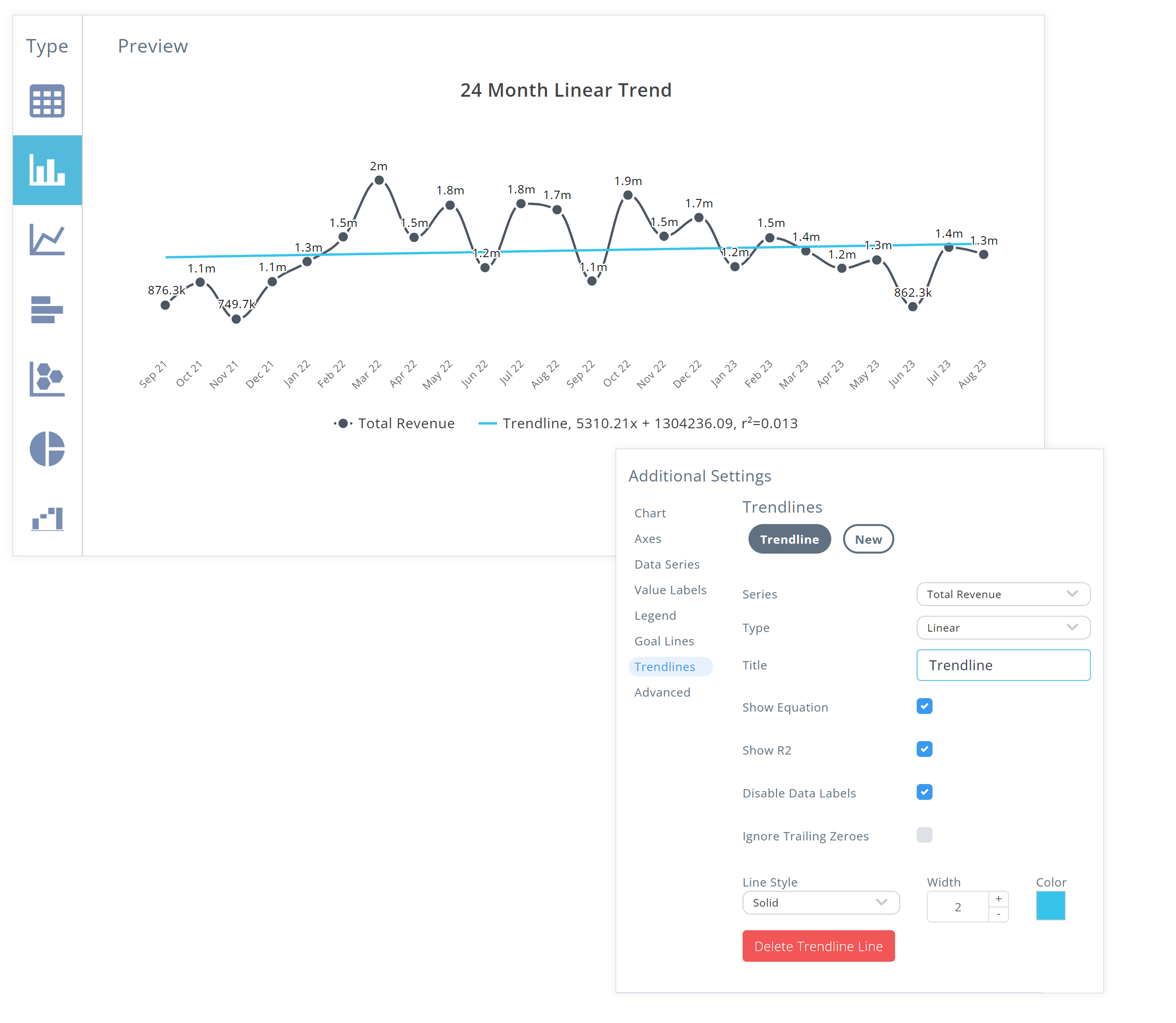
Visualize Trends in Reports
Show your trending trajectory from past actuals and uncover the necessary improvements and percentage increases needed to surpass your goals and forecasts. Visual trend analysis helps accountants and business owners clearly see where performance is heading and what changes are required.
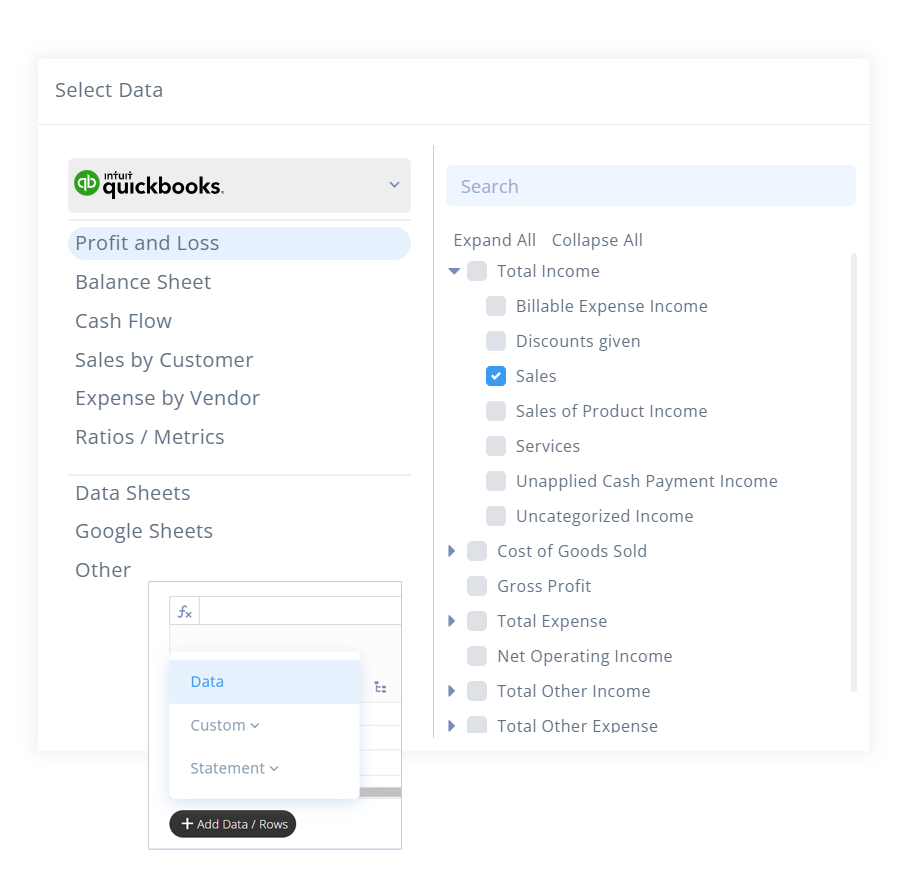
Intuitive Data Picker
Metrics are where data magic happens. Choose one from our template metrics library or start from scratch. Add different date ranges and data types you need for your analysis with ease. Select either an actual, budget, or forecast data type or bring in additional non-financial data, like project or department names. Easily add blank rows and columns for custom formulas.
Metric Builder
Utilize the comfort of a familiar spreadsheet environment to build new or transform existing template metrics with ease. Tailor every aspect to meet your specific needs. Switch between chart types with a click. Every output option has additional settings to help your visuals stand out.
FAQ: Flexible Customized Reporting
The following questions address how customizable financial reporting helps accountants deliver faster insights, improve advisory services, and support better business decisions.
What are customizable financial reports?
Customizable financial reports allow accountants to adjust layouts, metrics, formulas, and visuals to match specific client needs. Instead of relying on fixed templates, users can tailor reports to reflect unique business structures, goals, and financial data.
How does a spreadsheet-based reporting environment improve reporting?
A spreadsheet-based reporting environment allows accountants to work in a familiar format while maintaining live connections to financial data. This approach reduces learning curves, improves efficiency, and provides greater control over calculations and report structure.
Can financial reports be customized without rebuilding them every month?
Yes. Customizable financial reports can be saved as reusable templates, allowing accountants to update data automatically each period without rebuilding reports. This ensures consistency while saving time across recurring reporting cycles.
How do Excel-like formulas support financial reporting?
Excel-like formulas allow accountants to build custom metrics, ratios, and calculations using familiar logic. This makes it easier to create meaningful financial insights while maintaining transparency and control over how numbers are calculated.
What types of metrics can be built with customizable financial reporting tools?
Accountants can build profitability metrics, cash flow ratios, performance indicators, goal tracking metrics, and custom calculations specific to each client. Customizable tools support both standard financial metrics and business-specific KPIs.
How do financial goals and targets improve reporting?
Financial goals and targets allow accountants to compare actual performance against defined benchmarks. Visual goal tracking helps clients clearly understand progress, identify gaps, and align financial decisions with long-term objectives.
Why is visual trend reporting important for financial analysis?
Visual trend reporting helps accountants and business owners see how financial performance is changing over time. By analyzing trends from past actuals, users can identify patterns, anticipate challenges, and make more informed planning decisions.
Can customizable financial reports include non-financial data?
Yes. In addition to financial data, customizable reports can include non-financial information such as departments, projects, locations, or operational categories. This added context helps connect financial performance to real business activity.
Who benefits most from customizable financial reporting?
Customizable financial reporting is especially valuable for accountants, advisory firms, and finance teams that serve diverse clients. Flexibility ensures reports remain relevant across different industries, business models, and reporting requirements.