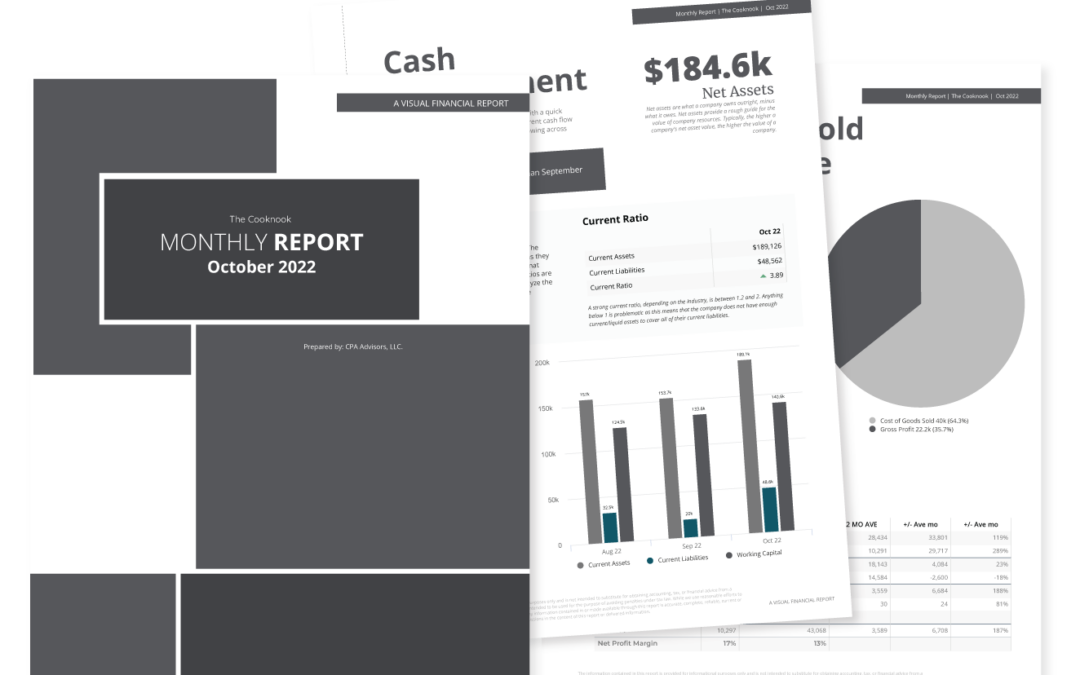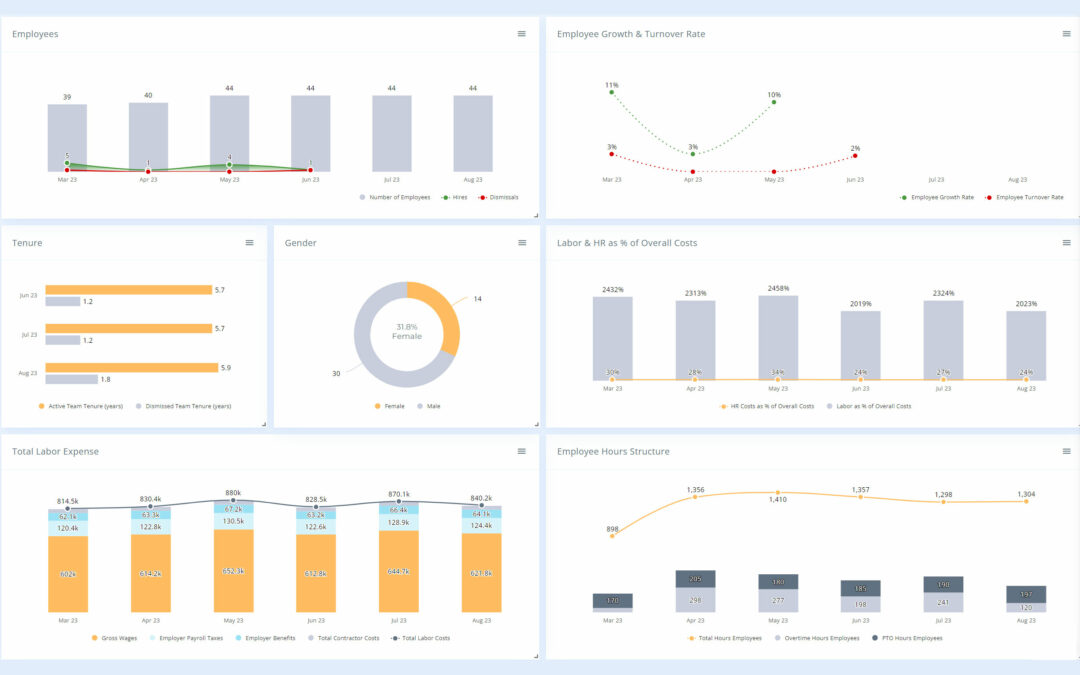
Watch the overview
Arthur walks through why forecasts fall behind, and what fixes it.
“Budgets take too long.” “I redo the forecast every time something changes and it never stays current.” “I want to offer this to clients, but where do I find the hours?” I hear some version of those three at almost every conference booth, demo, and webinar I run. It ranks right up there with the tax season grind as a universal complaint.
That’s exactly why most firms only ever hand clients a report that looks at the past. Forecasting doesn’t get skipped because it doesn’t matter, it gets skipped because it’s hard to keep current once it’s built. But a report alone is only half the picture. A budget sets the plan, a forecast keeps it honest as things change, and together they show a client not just where the business has been but where it’s actually headed, which is the piece that makes an advisory relationship worth paying for. Here’s why that gap is so hard to close, and how to close it anyway without turning it into another monthly rebuild.
Quick answer
Budgeting and forecasting are hard because a budget is a fixed plan set once, while a forecast has to be updated constantly as real numbers come in. Most firms don’t have time to keep both current by hand. The fix isn’t skipping forecasting, it’s connecting it to actuals so it updates without a manual rebuild every month.
Clients Don’t Ask for “Budgeting and Forecasting.” They Ask This Instead.
Almost nobody walks into a meeting and says “I’d like a forecast, please.” What they actually ask sounds more like:
- Are we on track to hit our revenue goal?
- Can we afford to hire another person?
- Why is cash tight when the P&L says we’re profitable?
- What happens if sales slow down next quarter?
- Can we make this purchase without creating a cash problem?
None of those are reporting questions. Answering them takes a plan, a current result, and an updated read on what’s next, in other words, all three pieces working together.
A Budget and a Forecast Are Not the Same Thing
People use the words interchangeably, and I get why, but they do different jobs.
A Budget Sets the Plan
Built before a period starts. It sets expectations for revenue, expenses, profit, and cash, and once it’s approved, that becomes the baseline everything else gets measured against for the rest of the period.
A Forecast Updates the Outlook
A forecast doesn’t sit still. Say January comes in differently than planned, revenue beats expectations, a cost spikes, a project slips. The budget stays exactly where it was, as the benchmark. The forecast moves, because it’s supposed to reflect what’s actually happening now, not what someone assumed in November.
Some firms reforecast monthly, some quarterly. The cadence matters less than actually doing it instead of setting assumptions once and never touching them again. The Government Finance Officers Association describes forecasting as a way to evaluate current and future financial conditions to guide decisions, which is really the whole point. Nobody’s forecast is a perfect prediction. It’s a structured guess you keep correcting.
If the difference still feels blurry, here’s the side-by-side version.
| Budget | Forecast | |
|---|---|---|
| When it’s built | Before the period starts | Updated throughout the period |
| What it assumes | A fixed target | Current, changing conditions |
| Does it change | No, stays the benchmark | Yes, moves as actuals come in |
| What it’s for | Measuring performance against plan | Deciding what to do next |
Three Elements of a Valuable Deliverable
A report alone was never enough, and neither is a report plus a budget nobody’s touched since January. The clients who actually trust their numbers get all three, working together.
Budget
What’s supposed to happen.
$75,000
Monthly revenue | plan
Report
What actually happened?
$80,000
Monthly revenue | actuals
Forecast
What’s likely to happen?
$960,000
Projected year-end revenue
Put together, that’s plan, performance, and outlook. The budget sets the target, the report shows where things landed, and the forecast turns that into something you can actually act on. Leave any one of them out and the story’s incomplete, no matter how clean the numbers are.
Profit Does Not Guarantee Cash
Here’s the one that catches people off guard every time: a business can be profitable on paper and still run out of cash. Say it closes a big sale this month but won’t collect for 45 days. That revenue is sitting on the P&L right now, looking great, and it still can’t make payroll until the customer actually pays.
Debt does something similar. Part of a loan payment is interest expense on the income statement. The rest reduces a liability on the balance sheet. Both pieces move cash, just in different directions and at different times, and a plan that only watches profit will miss the exact month the bank balance gets uncomfortably low.
Profit vs. cash: one sale, 45 days
Day 0
The sale closes. Revenue lands on the P&L.
Day 15
Payroll is due. The cash isn’t there yet.
Day 45
The customer pays. Cash finally arrives.
Profitable the whole time. Short on cash for a month of it.
Profitable and solvent are not the same word, and mixing them up is the single biggest disconnect I hear about between accountants and the clients they’re trying to advise.
Arthur Boutin, Director of Client ExperienceShare on LinkedIn
What Is Three-Way Forecasting?
Three statements, tied together instead of planned in isolation: the income statement, the balance sheet, and the cash flow statement. Raise revenue and the model shows what happens to profit, receivables, taxes, and cash, all at once. Add a loan and it accounts for the liability, the interest, the principal payment, and the cash hit.
The U.S. Small Business Administration puts the balance sheet at the center of this for a reason: it’s what lets you project cash forward instead of just totaling income and expenses after the fact. That’s the only way to know whether a plan that looks profitable on the income statement is actually workable once cash gets involved.
Three-way forecasting

How Can AI Help with Budgeting and Forecasting?
When a report, a budget, and a forecast all live in the same connected place, AI can do something more useful than repeat the numbers back to you. It can look at a budget next to the actual result, flag the variance that’s bigger than usual, and write out in plain language what moved and by how much, before you’ve opened the file yourself. I watched this happen live in a demo once: the accountant clicked one button, and instead of a chart, he got an actual paragraph explaining which expense line ran over and why it mattered against the plan. He said out loud, “that would’ve taken me twenty minutes to write myself.”
Picture pressing one button and, in a few seconds, having a full analytical overview of the budget and forecast sitting in front of you. It’s not a replacement for your judgment, more like a head start, something that hands you a few extra ideas to pair with the professional insight and years of experience you already bring to the table. Accountants stay in control of whether a recommendation actually goes to the client. That should never change.
Budget vs. actuals, Q1
Sample client · $900,000 annual budget
Revenue performance is trending ahead of plan. Actual revenue increased from $72,000 in January to $80,000 in March, representing 11.1% growth over the three-month period.
First-quarter revenue totaled $228,000 compared with a budget of $217,000, placing the business $11,000 or 5.1% ahead of plan. March produced the strongest result, finishing $5,000 above its $75,000 monthly budget.
Based on current results and updated expectations, year-end revenue is forecast at $960,000. This would place the business $60,000, or 6.7%, above its original $900,000 annual budget.
To achieve the forecast, revenue must average approximately $81,300 per month from April through December. This target is slightly above March’s performance and appears achievable if the current upward trend continues.
Recommended action: Identify the factors driving recent revenue growth, confirm that sufficient staffing and operating capacity are available, and monitor monthly performance against the updated forecast.
Why Budgeting and Forecasting Builds Client Trust
The biggest thing is timing. A client who spots a developing problem in March has real options, cutting spending, changing pricing, holding off on a hire, chasing down collections faster. A client who finds out about the same problem after year-end has a story about what went wrong, not a decision they can still make.
It also gives a number context it wouldn’t otherwise have. An $80,000 revenue month sounds good on its own, but against a $75,000 budget, that’s a $5,000 favorable variance, close to 7% ahead of plan. Now the forecast can answer the next obvious question: does that change where the year’s actually headed?
Maybe the simplest way to put it: a report ends with an email. A budget and a forecast start a conversation, what changed, why, and what to do about it. That’s the part clients actually remember, and it’s the part they’re willing to pay for.
How Budgeting and Forecasting Grows Your Firm’s Advisory Revenue
You already have most of what this takes. You know the client’s history, their chart of accounts, their seasonality, their risk spots. Budgeting and forecasting doesn’t ask you to learn a new client, it asks you to point what you already know forward instead of only backward.
It also changes what the meeting itself is for. Instead of walking line by line through a statement, the conversation can go straight to what actually changed, why, and what the client should do about it, which puts you in the room as part of the decision instead of the person recapping last month. And a recurring routine like that, one that measures against a plan and updates the outlook every month, is a lot easier to justify charging an advisory rate for than a report that just repeats what QuickBooks already shows. It’s also the kind of work that’s genuinely harder to walk away from. Once a firm’s helped a client see a cash problem coming or stress-test a hiring decision, that relationship isn’t just a vendor anymore.
Try it: budget vs. actual
Is that month really a win?
Ahead of plan. The real question: is this one good month, or an actual trend?
Why Is Budgeting and Forecasting So Hard to Actually Deliver?
Because none of the above is the hard part. The hard part is doing it consistently, for every client, every single month.
A budget is supposed to stay put once it’s approved. A forecast isn’t supposed to, it needs to move every time a real result, a new contract, a hiring plan, or a pricing change shows up, and keeping that current by hand turns into a full rebuild every month. Add to that the fact that the numbers usually live in different places. Actuals in QuickBooks, drivers in somebody’s spreadsheet, payroll and sales data somewhere else entirely, and before you’ve analyzed anything you’ve spent an hour just exporting, copying, and checking that it all still ties out. Ask a firm doing this by hand and the answer is usually 10 to 20 hours a month, per client, just to keep the model current. That’s not planning time. That’s upkeep.
I hear a version of this from almost every firm I talk to, which tells you it’s not a one-off problem, it’s structural. Spreadsheets aren’t the actual problem here, they’re flexible and everybody already knows them. What breaks down is the workflow around them: exporting, rebuilding formulas, updating dates, checking that every statement still connects to the last one.
That’s the sweet spot: a spreadsheet connected directly to live accounting data, so the numbers update on their own instead of waiting on someone to export and paste them in. But it’s still a spreadsheet underneath, so you can open up a formula and see exactly how a number was built, or add a metric of your own and connect that to the same live feed too. That’s really the best of both worlds, the flexibility accountants already trust, without the manual upkeep that usually comes attached to it.
What Is Driver-Based Planning?
Not every line on a forecast should be built the same way, and “grow everything 5% a year” explains nothing about why a number actually moves. Better version: labor cost tracks headcount and comp. Merchant fees track as a percentage of sales. Revenue gets modeled as units sold times average price. Loan balances decline on the actual repayment schedule. Receivables get projected off the average collection period, not a guess.
Built that way, a forecast turns into an actual conversation. If the plan calls for two new hires, how much revenue do they need to produce to pay for themselves? If Q1 misses target, what does the rest of the year need to hit to catch up, and if that’s not realistic, what changes instead?
| Approach | What it solves | What to weigh |
|---|---|---|
| Keep using spreadsheets | Maximum flexibility, a format everyone already knows | Manual updates, version control headaches, and it doesn’t scale past a handful of clients |
| Stack specialized tools | Deeper functionality for each individual task | More systems, more logins, more training, more subscriptions |
| Hire additional staff | More hands and human oversight | Recruiting, salary, onboarding, and it still depends on one person’s process |
| Adopt an all-in-one platform | Reporting, budgeting, forecasting, and delivery in one place | Worth a real evaluation of flexibility, integrations, and setup time |
None of these is automatically right for every firm. The real question is whether whatever you pick can stay accurate, explainable, and profitable as your client list grows, not just today, with the five clients you’re thinking about right now.
Budgeting and Forecasting Is the Easiest CAS Service to Add
Once the manual rebuild is off the table, budgeting and forecasting becomes one of the more approachable Client Advisory Services a firm can add. It doesn’t need a new certification or a new department, it runs on numbers the firm already has. And it changes the relationship: instead of showing a client what happened last quarter, the conversation becomes about what to do next quarter, which is a much easier thing to bill advisory rates for than another compliance deliverable.
It also tends to be the more enjoyable work. Close and compliance matter, but they rarely produce a moment where a client leans forward and asks “so what should we actually do.” Forecasting produces that moment on a regular basis, and it’s the part of the job most of the accountants I talk to say reminds them why they got into advising clients in the first place, not just their books.
What to Look For in an All-in-One Budgeting and Forecasting Solution
If your firm’s leaning toward that fourth option above, here’s the honest checklist, not a feature list dressed up to sound impressive:
- Connects directly to the accounting systems your clients already use, no manual export required
- Updates actuals automatically instead of making someone rebuild the model every month
- Keeps the approved budget fixed while letting the forecast move as things change
- Ties the income statement, balance sheet, and cash flow statement together, not just one of them
- Lets you build off real business drivers, headcount, pricing, collection timing, instead of a flat growth guess
- Shows actual, budget, and forecast side by side instead of in three separate files
- Lets you reuse your own templates across clients instead of starting from scratch every time
- Actually explains the numbers to a client in plain language, not just a bigger chart
A Practical Monthly Budgeting and Forecasting Workflow
You don’t have to rebuild the plan from zero every month. A workflow that actually scales tends to look like this:
- Refresh actuals. Pull in the latest accounting and operational data.
- Look at what moved. Focus on the variances big enough to actually change a decision.
- Update the assumptions that changed. Timing, pricing, a new hire, collections, whatever’s different now.
- Recalculate the forecast. See what it does to profit, the balance sheet, and cash.
- Have the actual conversation. Talk through the outlook, decide on an action, write down the assumptions you used.
In practice: Here’s roughly what that looks like: say revenue comes in at $80,000 against a $75,000 budget, about 7% ahead of plan. Before anyone gets excited, that’s worth a few follow-up questions: is this one good month or an actual trend? Which clients or services actually drove it? Can the team support that pace if it continues? And don’t skip the obvious check, more revenue doesn’t automatically mean more profit, so margin and cash still need a look before anyone calls it a win.
The Real Deliverable Is the Decision
A budget that sits in a folder and a forecast that gets updated once a year won’t move the needle for anybody. The value only shows up when a firm actually uses all three views, every month, together.
The report says what happened. The budget says whether that matched the plan. The forecast says where things are probably headed from here. Your advice is the part that connects those three things to an actual decision, delay the equipment purchase, hire now instead of next quarter, tighten a cost, chase collections harder, revise a target that was never realistic to begin with.
Nobody’s asking a firm to predict the future perfectly. The job is noticing the change early enough that it’s still useful, and reporting was never supposed to be the finish line, it’s the opening argument for the conversation that actually matters. The accountants getting the most out of this aren’t the ones with the fanciest model. They’re the ones who’ve made budgeting and forecasting a standing part of the client relationship instead of a project they mean to get to eventually.
How to Evaluate a Budgeting and Forecasting Platform Before You Commit
Use the full trial period for every solution you consider. Connect actual client data, automate one report, customize it, and build one from scratch. This is how you discover how restrictive or flexible the platform really is, how quickly support responds, and whether the software genuinely reduces your workload.
Now that you know what to look for, test Reach Reporting with your own data. Don’t take our word for it.
Try it with your own data
See how flexible it really is.
30-day free trial. No credit card required.
Glossary
Key Terms in This Guide
- Budget
- A fixed plan set before a period starts, used as the benchmark for the rest of it.
- Forecast
- A living projection that updates as real results come in.
- Three-way forecast
- A model that connects the income statement, balance sheet, and cash flow statement so they move together.
- Driver-based planning
- Building forecast line items off real business drivers, like headcount or collection period, instead of a flat growth percentage.
- CAS (Client Advisory Service)
- Forward-looking advisory work, like budgeting and forecasting, offered alongside traditional compliance work.
FAQ
Frequently Asked Questions
What’s the difference between a budget and a forecast?
A budget is the plan set before a period starts and measured against for the rest of it. A forecast is a living update of where the business is actually expected to land, adjusted as real results come in. The budget stays fixed as the benchmark; the forecast moves.
Why add budgeting and forecasting to monthly reporting?
A report explains the past. A budget and forecast give that past some context, whether it’s on plan, and what it likely means for cash and profit going forward.
Do clients actually want budgeting and forecasting?
Not by that name, usually. But “are we on track,” “can we afford this,” and “what happens if sales slow down” are all the same question with different words, and that’s exactly what a budget and forecast are built to answer.
Can a profitable business still run out of cash?
Yes. Profit on the income statement doesn’t account for cash tied up in receivables, inventory, loan principal, or equipment purchases. A business can show a profit and still miss payroll if that profit hasn’t turned into collected cash yet.
What is three-way forecasting?
It’s connecting the income statement, balance sheet, and cash flow statement so a change in one flows through all three, instead of modeling revenue or expenses in isolation.